
Community
Incense, dances and marigolds: Mountain View celebrates Día de Muertos
By Marcus Chen
Advertisement · Why this ad?
Marcus manages the day-to-day editorial workflow across all brands, coordinating coverage assignments and ensuring editorial standards are met. He previously served as city editor at the Pioneer Press and holds a degree in Political Science from Carleton College.
More from Marcus →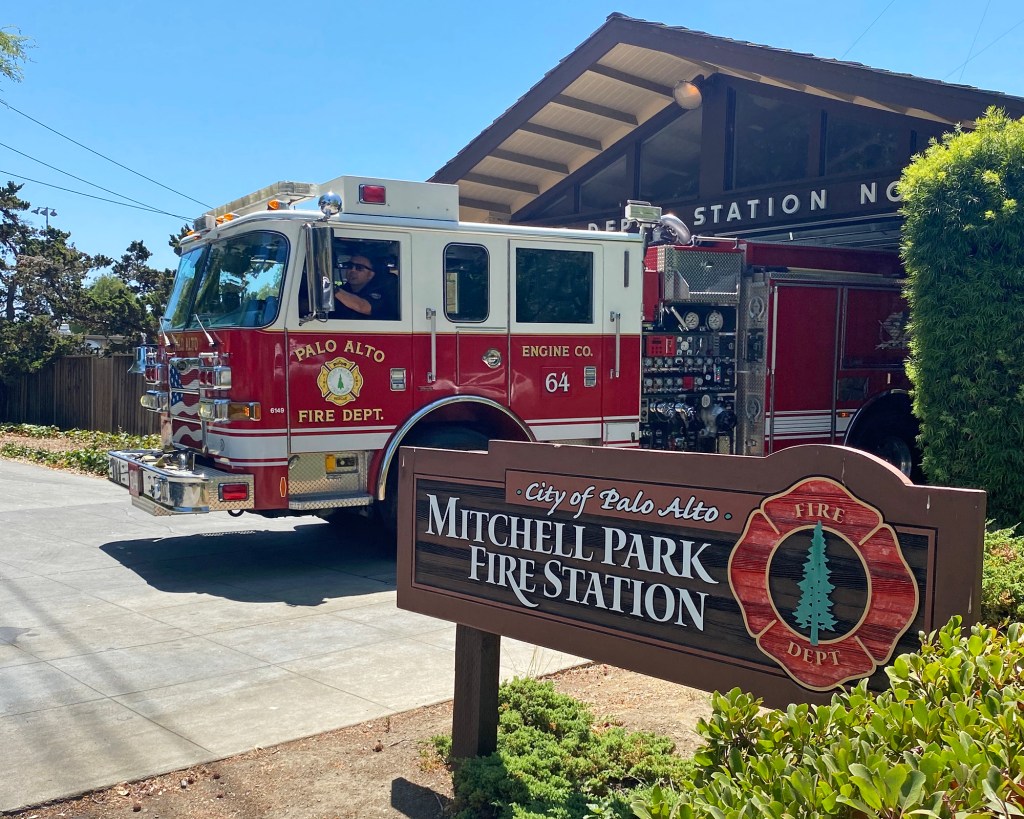
Getting your Trinity Audio player ready... HELP IS ON THE WAY … The Palo Alto Fire Department is preparing for a critical milestone next spring, when the city’s newly established single-role paramedics officially start delivering medical care to the local community. Once in place, the civilian employees will take on a critical role that has always been performed by firefighters. With medical calls for service making up more than 60% of the department’s calls for service, the City Council agreed in 2025 to launch a civilian division that would be solely devoted to medical response. The change comes at a time when the department is seeing an increase in activity. In fiscal year 2025, the department responded to 10,144 incidents within Palo Alto and Stanford University, marking the first time its calls exceeded the 10,000 mark. These included 6,129 medical/rescue calls and 172 fire incidents, according to the city budget. City Manager Ed Shikada said this week that the city is in the process of extending offers to four full-time paramedics and three part-time paramedics. This, he said, will enable the first single-role EMS unit to be in service later this spring, following the completion of their internal academy. “Really, a remarkable next phase for our Fire Department that will continue to build our capacity, really generating additional confidence in the department,” Shikada told the City Council during a Nov. 2 update. Meanwhile, work is progressing on rebuilding Fire Station 4 near Mitchell Park. The new station will include separate staffing quarters for the station’s fire engine and the future fully-staffed ambulance, Shikada said. TAX FOR THEE … The majority of Palo Altans appear to be voting against Proposition 40 , which could tax the wealth of about 20 billionaires who live in the city, according to the ballot count available Wednesday evening. Nowhere was this rejection more pronounced than the city’s own billionaire row in Crescent Park , where Meta CEO Mark Zuckerberg infamously maintains a sprawling compound of homes. In the two precincts that cover that area, 66% of voters said no to Proposition 40. The only other part of the city that had an equal margin of opposition was Leland Manor , but many other areas saw a majority of voters against the billionaire tax: Old Palo Alto, Professorville, Esther Clark Park, Barron Park and most of Midtown. A select few precincts in Palo Alto went the opposite way and voted in favor of the tax, including parts of the Ventura and Charleston Meadows neighborhoods, Downtown North and a handful of voters who live in the precincts on the east of the U.S. Highway 101. The Crescent Park neighborhood also saw marginally higher turnout for Proposition 40 compared to every other precinct: 37% of registered voters marked their ballots one way or another for the billionaire tax, while the rest of the city hovered between 29 and 35% turnout as of Wednesday evening. Statewide, the race is still too close to call, and a number of ballots remain to be counted locally, too. An analysis by this publication before Election Day also found that dozens of billionaires residing in Silicon Valley spent millions of their own money to defeat Prop 40. Two of them — Baiju Bhatt and Vlad Tenev , who cofounded the financial service Robinhood — list their primary residency in Palo Alto, according to Forbes , and each donated $1 million to a political action committee opposing the measure. The City Council , for its part, declined to stake out a position on the proposition, even though close to 10% of the state’s billionaire class call Palo Alto home. Most Popular Stanford looks to build 8-story housing complex at Research Park November 6, 2026 12:26 pm Palo Alto's historic Squire House hits market for $19.9M November 6, 2026 6:03 pm Measure J retains slim lead as voters weigh in on Cubberley November 3, 2026 9:34 pm
By Marcus Chen

By Marcus Chen

By Marcus Chen
By Katherine Langford